
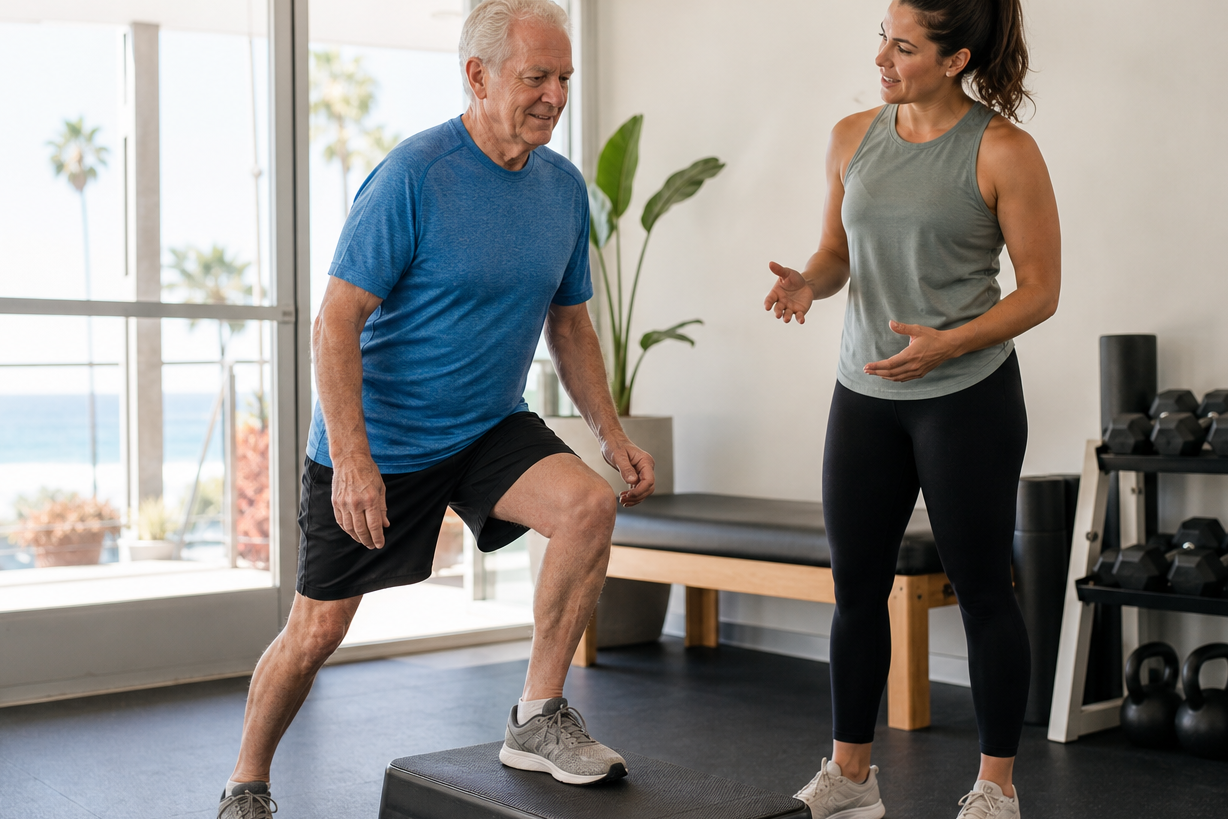
A walk can be much more than exercise. It may be part of a trip to the farmers market, time with family, a visit to a local park, or a relaxed afternoon near the coast. For adults 60 plus in Encinitas, preparing for those outings can include practicing the strength, mobility, pacing, and everyday movement skills that walking asks of the whole body.
Personal training can provide a structured way to practice those skills. The focus does not need to be on speed, distance, or competing with anyone else. It can be on building a routine that matches your current starting point and the kinds of activities you want to enjoy.
Look Beyond the Steps
Walking involves more than moving one foot in front of the other. A typical outing may ask you to stand up from a chair, start and stop, change direction, step onto a curb, use a few stairs, carry a light bag, and stay on your feet for a period of time.
That is why functional fitness can be useful in personal training for adults 60 plus. Exercises can be selected to resemble parts of daily life without trying to copy an entire outing in the gym.
For example, a training session might include a comfortable sit-to-stand variation, controlled step practice, a supported calf raise, or a short carry with an appropriate load. The exact choices should reflect the individual, the setting, and any guidance from a qualified healthcare professional.
Practice Strength That Connects to Daily Movement
Strength gives the body options for everyday tasks. Leg and hip strength contribute when standing from a bench or moving up a step. Trunk strength helps organize posture while walking or carrying. Upper-body strength can be useful for holding a day bag or managing a light household item.
Personal training can break these tasks into manageable pieces. A movement can be practiced with a shorter range, a stable support, a lighter load, or a slower pace. As a movement becomes familiar, the session can change gradually while keeping technique and comfort in view.
Progress does not have to mean adding more weight every time. It may mean completing a movement with better control, using a slightly different position, or feeling more familiar with the exercise sequence.
Include Mobility in the Plan
Mobility helps you move through the positions an outing may require. Ankles contribute when the ground changes or when stepping forward. Hips and the upper back participate in stride, posture, and turning. Shoulders move when the arms swing or when you carry something light.
A practical routine might include gentle ankle motion, hip movements, upper-back rotation, and relaxed shoulder movement. These are not tests of flexibility. They are opportunities to practice comfortable range and notice how movement feels that day.
No one needs to force a stretch or chase a dramatic position. If a movement causes pain or raises a concern, stop and seek guidance from an appropriate health professional.
Build Walking Confidence Through Familiarity
Confidence often grows from knowing what to expect. Personal training can create a predictable environment for practicing starts, stops, turns, step patterns, and other simple movement changes.
The goal is not to make every sidewalk or trail identical. It is to become more familiar with common movement demands and with your own preferred pace. A trainer can also help keep the session organized so you can focus on one cue or task at a time.
This approach keeps the tone practical. It avoids framing normal changes in strength or mobility as a reason for fear. Adults 60 plus bring different histories, interests, and starting points to exercise, and a useful plan respects those differences.
Use Pacing to Make Outings More Enjoyable
Pacing is a skill. Starting more slowly, choosing a route that fits the day, taking planned breaks, and leaving some energy for the return trip can all support a more comfortable experience.
A walking routine can begin with a duration that feels manageable and repeatable. From there, one variable can change at a time, such as a few additional minutes, a slightly different route, or an extra outing during the week. There is no single pace or distance that everyone must reach.
Personal training can support this process by connecting gym practice to a realistic walking plan. It can also provide a regular time to review what felt comfortable, what felt demanding, and what to adjust next.
Consistency Beats the Perfect Plan
A routine is more useful when it fits real life. Weather, travel, sleep, work, and family plans can all change the week. A flexible plan may include a main walking option, a shorter option, and an indoor movement option.
Simple habits can help:
Choose walking days in advance while leaving room to adjust.
Keep shoes and any needed items easy to find.
Use a familiar route when you want fewer decisions.
Pair walking with another enjoyable activity, such as meeting a friend.
Record only the details that help you stay consistent.
Missing a day does not erase the routine. Returning at the next practical opportunity is part of consistency.
A Low-Pressure Next Step
Everyday outings ask for a blend of strength, mobility, pacing, and confidence. Personal training can offer adults 60 plus a structured place to practice those pieces in a way that reflects their goals and experience.
If you are curious about the approach, Ageless Fitness Encinitas welcomes a low-pressure conversation about personal training for adults 60 plus. You can learn how sessions are organized and decide whether the format feels like a good fit for the activities you want to enjoy.